




Most marketing teams are running both growth marketing and demand generation, they just don't know it. And because there's no clear ownership, they're probably doing both poorly.
Here's the real problem: companies that blur the line between these two strategies end up with a bloated top of funnel, poor activation rates, high churn, and a sales team that blames marketing for bad leads. Sound familiar?
If any of that resonates, the issue likely isn't effort. It's clarity on which brand marketing strategy to run, when, and how to measure it.
What Is Demand Generation?
Demand generation is a marketing strategy focused on building brand awareness, attracting high-intent prospects, and nurturing them into a qualified sales pipeline.
The goal isn't just to capture leads. It's to create buying interest organically, so that when a prospect enters an active buying cycle, your brand is already top of mind.
What Demand Generation Is NOT
Demand generation is frequently confused with lead generation. They are not the same.
- Lead generation is transactional. You gate content, capture contact details, and pass them to sales.
- Demand generation plays a longer game. It uses ungated content, thought leadership, and education to build trust before a prospect ever fills out a form. Lead gen can be a tactic within demand gen, but it's not a substitute for it.
When Demand Generation Works Best
Demand generation is especially powerful for companies with large sales teams that need a consistent pipeline, businesses with long enterprise sales cycles, brands entering a new market or category, and organizations where brand awareness is low but ICP is well-defined.
What Is Growth Marketing?
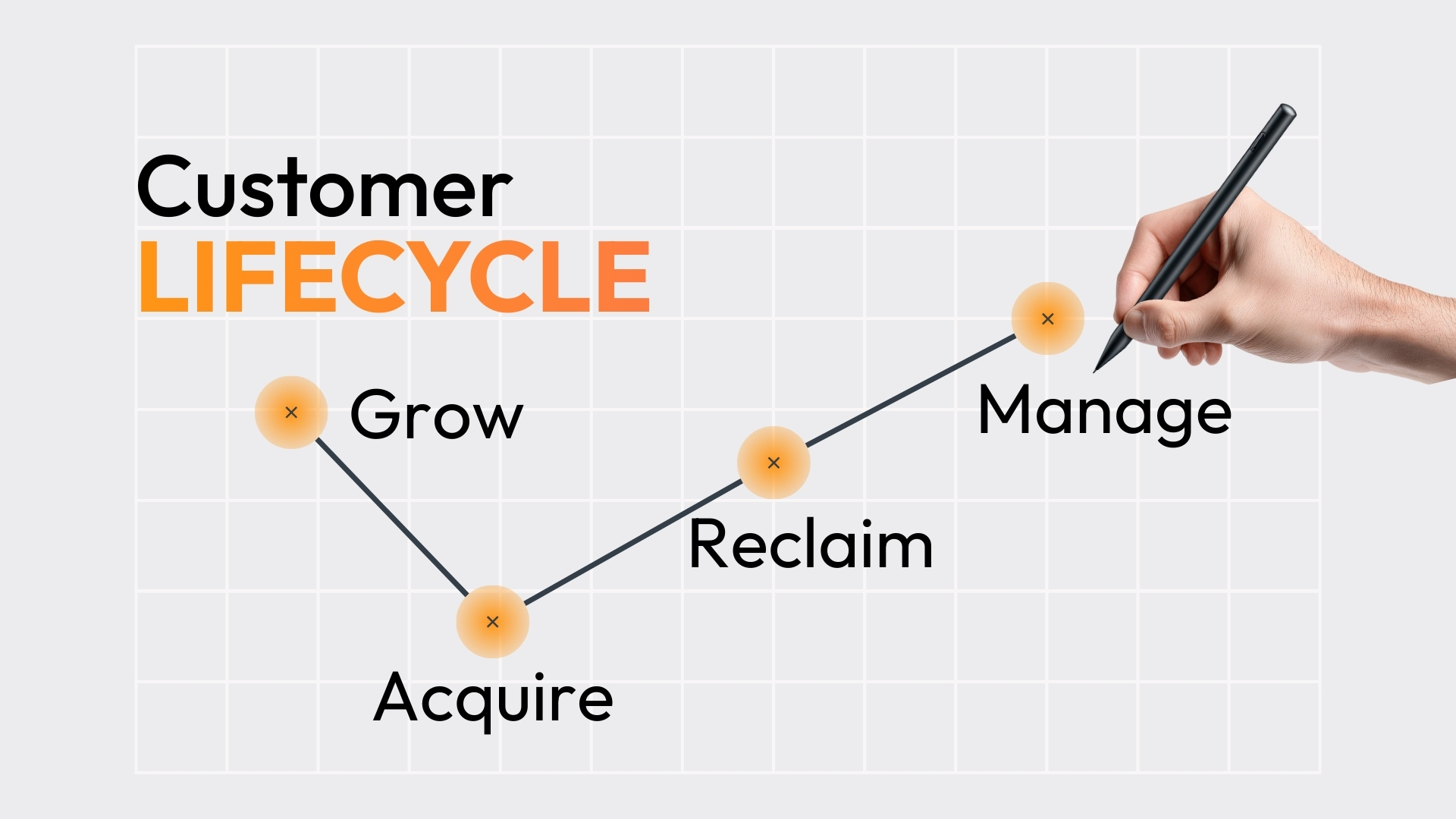
Growth marketing is a full-funnel, data-driven approach that optimizes every stage of the customer lifecycle, from first awareness through retention, expansion, and referral.
Where demand generation asks "how do we fill the pipeline?", growth marketing asks "how do we grow revenue across the entire customer journey?"
A classic example: when Dropbox introduced its referral program ("Get free storage for every friend you invite"), that wasn't a demand gen campaign. It was growth marketing, turning existing users into an acquisition channel and reducing CAC in the process.
When Growth Marketing Works Best
Growth marketing is especially well-suited for PLG (product-led growth) companies where the product is the primary acquisition channel, businesses post-Product-Market Fit (PMF) looking to scale efficiently, SaaS companies where retention and expansion drive most revenue growth, and teams managing complex B2B sales with multiple stakeholders.
The Main Difference Between Growth Marketing and Demand Generation
The channels both strategies use are nearly identical: content, SEO, paid media, webinars, email. What differs is the objective, the funnel coverage, and how success is measured.
Demand generation owns the top and middle of the funnel. Its primary goal is pipeline creation, and success is measured by MQL-to-SQL conversion. It operates on a linear funnel model and works best for sales-led GTM motions.
Growth marketing owns the full funnel. Its goal is revenue growth across the entire customer lifecycle, measured by Net Revenue Retention, Lifetime Value (LTV) to Customer Acquisition Cost (CAC), and activation rate. It operates on a loop model and is best suited for PLG companies and post-PMF scaling.
Linear Funnels vs. Growth Loops
Demand generation operates on a linear funnel model. Prospects enter at the top and (ideally) exit as customers at the bottom.
Growth marketing operates on a loop model. The AAARRR framework, Awareness, Acquisition, Activation, Revenue, Retention, Referral, treats retention and referral not as endpoints, but as inputs back into the top of the funnel.
Happy customers generate referrals, case studies, and word-of-mouth that reduce future acquisition costs. Demand generation rarely measures this dynamic. Growth marketing is built around it.
KPIs for Demand Generation vs. Growth Marketing
The fastest way to tell whether you’re running demand generation, growth marketing, or a messy hybrid is to look at what you measure and reward.
Key Terms to Know
- MQL - a lead meeting criteria that indicates readiness for sales outreach
- SQL - an MQL validated by sales as a real opportunity
- CAC - total marketing and sales spend divided by new customers acquired
- LTV - total revenue a customer generates over their relationship with you
- NRR - revenue retained and expanded from existing customers, net of churn
- Activation Rate - percentage of new users completing the key action that predicts long-term retention
Demand Generation KPIs
- MQL volume and quality - are enough leads coming in, and are they the right fit?
- MQL to SQL conversion rate - are marketing leads converting to real sales opportunities?
- Pipeline sourced and influenced - what percentage of revenue pipeline did marketing create or touch?
- CAC by channel - where is acquisition most efficient?
- Lead-to-close velocity - are demand programs shortening the sales cycle?
- Brand engagement - share of voice, share of search, content consumption trends
Growth Marketing KPIs
- Activation rate - the percentage of new customers completing the key action that predicts retention
- Retention rate and logo churn - are customers staying?
- Net Revenue Retention (NRR) - revenue retained and expanded from existing customers, net of churn
- LTV and LTV:CAC ratio - is the lifetime value of a customer worth what it costs to acquire them?
- Referral rate - are existing customers bringing in new ones?
- Expansion revenue - upsell and cross-sell as a percentage of total revenue
When to Prioritize Each Strategy
Most teams pick a strategy based on what they’re best at, not what the business needs. The better approach is to prioritize based on your current constraint.
By Business Stage
- Seed / Pre-PMF Focus on demand generation. Validate your ICP, generate initial pipeline, and learn who your best customers are before building lifecycle programs around them.
- Series A-B (Sales-Led GTM) Demand generation dominates. Build repeatable pipeline, define MQL criteria, and align with sales on lead quality. Start instrumenting activation and retention so you have a baseline when you need it.
- Series A-B (PLG Motion) Growth marketing takes priority earlier. Activation rate and retention are survival metrics before you have the scale to invest heavily in demand programs.
- Series C and Beyond Both functions should be fully operational. The strategic question shifts to integration: how do demand programs feed lifecycle triggers, and how do growth insights sharpen demand messaging?
By Funnel Symptom: A Diagnostic Guide
- If you're seeing low brand awareness or traffic, that's a demand generation problem. Invest in content, SEO, and paid media to build top-of-funnel volume.
- If traffic exists but conversions are low, that's a growth marketing problem. Diagnose activation gaps and run CRO experiments before spending more on acquisition.
- If you're experiencing high churn or poor retention, fix onboarding and build lifecycle programs first. Pouring more leads into a leaky bucket won't help.
- If you're dealing with long sales cycles or stuck pipeline, you likely need both: ABM and nurture to warm accounts, and sales enablement to accelerate close.
- For a new product launch, lean into demand generation to build category narrative and use paid distribution to generate awareness fast.
- At post-PMF scaling, run both in an integrated way. Layer growth experiments on top of demand programs for compounding returns.
How to Run Both Without Duplicating Work
The most common failure mode is metric silos. Demand gen reports on pipeline, growth reports on retention, and no one owns the full funnel.
Clear Ownership by Function
- Demand Gen owns: TOFU content, paid media, webinars, ABM programs, MQL definition, pipeline reporting
- Growth / Lifecycle owns: Onboarding sequences, activation experiments, retention programs, referral mechanics, expansion triggers
- RevOps owns: Attribution, CRM hygiene, and the single revenue dashboard that ties both functions together
- PMM owns: The positioning narrative that demand gen distributes and growth carries into lifecycle messaging. If these are misaligned, both teams tell different stories to the same customer
Operating Cadence
- Weekly - Growth experiment reviews alongside a demand gen performance pulse (MQL volume, spend pacing, conversion trends)
- Monthly - Full-funnel pipeline review where demand and growth metrics are presented together, not separately
- Quarterly - Positioning and narrative review, budget reallocation, and joint planning for next quarter's programs
Common Misconceptions
"Demand gen and lead gen are the same thing." They're not. Lead gen is transactional. You capture contacts in exchange for gated content. Demand generation builds organic interest so prospects seek you out.
"Growth marketing is just for startups." Growth marketing originated in a startup context, but the principles apply at any scale. A solo marketer tracking referral sources and A/B testing onboarding emails is doing growth marketing.
"You need separate teams to run both." Not at early stages. What you need is clarity on which metrics matter right now. One strong generalist can cover both with the right framework.
Two Functions One Revenue System
Growth marketing and demand generation aren't competing strategies. They're complementary functions that cover different parts of the same revenue system. Demand generation fills your funnel with the right prospects. Growth marketing makes sure those prospects activate, stay, expand, and refer others.
The businesses that win aren't the ones who pick one over the other. They're the ones who know which lever to pull at their current stage, diagnose where the funnel is leaking, and build the operating model to run both with clarity.
Ready to bring clarity to your marketing operations? See how we support marketing execution — from demand programs to full-funnel growth strategy.
.png)

.png)


.png)






